Urgent need for a shale gas moratorium amid drought and climate crisis (English version of press release)
While the new Prime Minister has called on the Minister for the Living Environment to develop a water management action plan in response to worsening drought and critically low water levels, water-intensive shale gas developments are moving in the opposite direction. Shale gas extraction is already underway in Hungary near Sarkad, while a new project is being prepared near Kiskunhalas, in the particularly water-stressed Danube–Tisza Interfluve (Homokhátság).
The situation is further aggravated by non-conventional hydrocarbon concessions announced in early 2026, including areas affecting protected natural sites. FoE Hungary has therefore addressed a letter to the relevant ministers of the new government, calling for a nationwide shale gas moratorium.
Letter to decision-makers
On behalf of 50 Hungarian civil society organisations supporting the Stop Shale Gas! initiative, FoE Hungary sent a joint letter to László Gajdos, Minister for the Living Environment, István Kapitány, Minister for Economic Affairs and Energy, and the newly elected Members of Parliament representing the affected regions. They are asking them to initiate and support the introduction of a nationwide shale gas moratorium as soon as possible, and to ensure that the government does not issue any new shale gas concession rights.
Concessions threaten protected areas
In early 2026, the former Ministry of Energy announced new mining concessions for the exploration and extraction of hydrocarbons down to a depth of 5000 metres. The designated concession areas include several protected natural sites, such as the Danube–Tisza Interfluve, the Hortobágy region, the Lake Tisza region, forests and wetlands in Zala county, as well as other Natura 2000 sites. The deadline for submitting concession bids expired in mid-May 2026; consequently, no results have yet been announced, and no contracts have been signed.
Risky investment with poor returns
FoE Hungary highlights that shale gas extraction is economically and energetically uncertain and carries significant risks. Its energy return on investment is lower than that of conventional natural gas. Domestic production has not made a meaningful contribution to energy security to date, while projects are costly and require continuous expansion of infrastructure and new drillings.
Across Europe, a dozen countries have restricted, banned or introduced moratoria on hydraulic fracturing due to these economic concerns as well as environmental and health risks. In contrast, Hungary is currently preparing to expand production and preparing new concessions.
Protection of water resources must be a priority
In a country already facing water scarcity, shale gas extraction raises serious environmental, social and economic concerns. It places additional pressure on water resources, undermines local agricultural activities, and affects sensitive natural areas.
“A nationwide shale gas moratorium is an issue that requires swift action from the new government, and its introduction is timely. Addressing the drought, critically low water levels and water scarcity is an urgent task, while shale gas investments move in the opposite direction. What is needed is not more water-intensive and climate-damaging investments, but water protection, precautionary measures, and the consideration of local communities’ perspectives said Róbert Fidrich, Programme Coordinator at – FoE Hungary.
“It is particularly timely for the new government, in line with the moratorium, to halt the decision-making processes for unconventional hydrocarbon concessions announced in early 2026, and to refrain from entering into new concession agreements for the exploration, development, or production of unconventional hydrocarbons. This would prevent further hasty shale gas investments. Shale gas extraction, particularly in protected natural areas, carries complex ecological risks that also impact food security,” added Eszter Galambos, Energy Campaigner at FoE Hungary.
Lack of transparency remains a concern
Legal proceedings regarding the disclosure of data related to the Sarkad shale gas project are still ongoing, highlighting a lack of transparency. In the data request case initiated in November 2024, Hungary’s Supreme Court (Kúria) ruled in favour of the organisation in July 2025. However, the Supervisory Authority for Regulated Activities has still not released the requested public interest data and initiated a uniformity of law proceeding in April 2026.
“We have prepared a draft text for a shale gas moratorium. Introducing it would require relatively few legislative changes and minor legal amendments, so progress depends primarily on political will. Under the previous government, we saw that both legislative and enforcement practices prioritised pushing these projects forward. Not only were successive gas field developments and drilling permits approved, but the authorities also restricted the public’s and civil society’s access to information, preventing important details from coming to light. We hope this will change now” said Dr Csaba Kiss, Director of Environmental Management and Law Association.
Further information
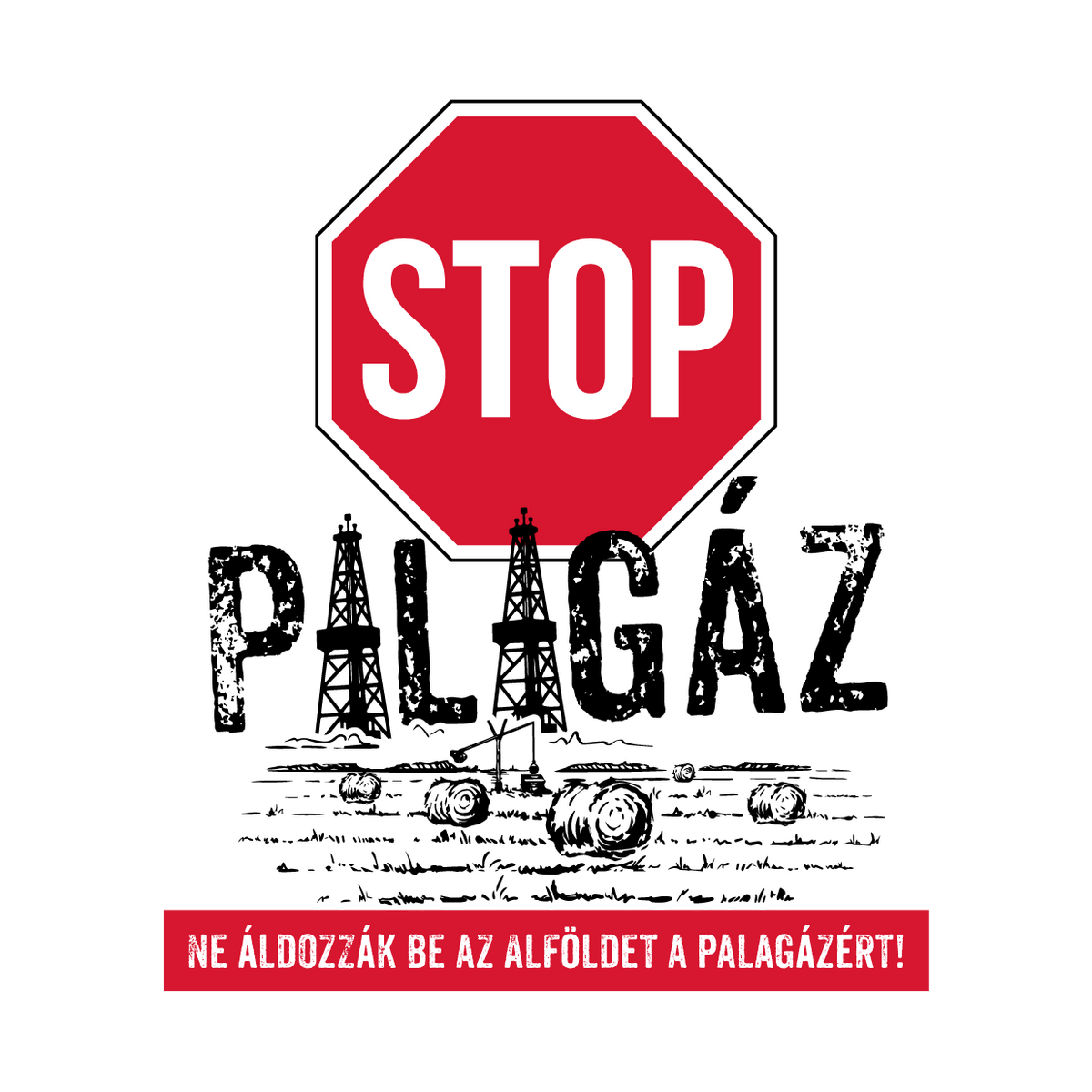
STOP SHALE GAS! initiative:
https://mtvsz.hu/stop-palagaz
Background material for decision-makers and local communities (in Hungarian)
https://mtvsz.hu/uploads/files/2026/stop_palagaz_hatteranyag_2026_05.pdf
Note: The term “shale gas” is used as an umbrella term for non-conventional natural gas occurrences, including tight gas, shale gas, coalbed methane, basin-centred gas accumulations etc.